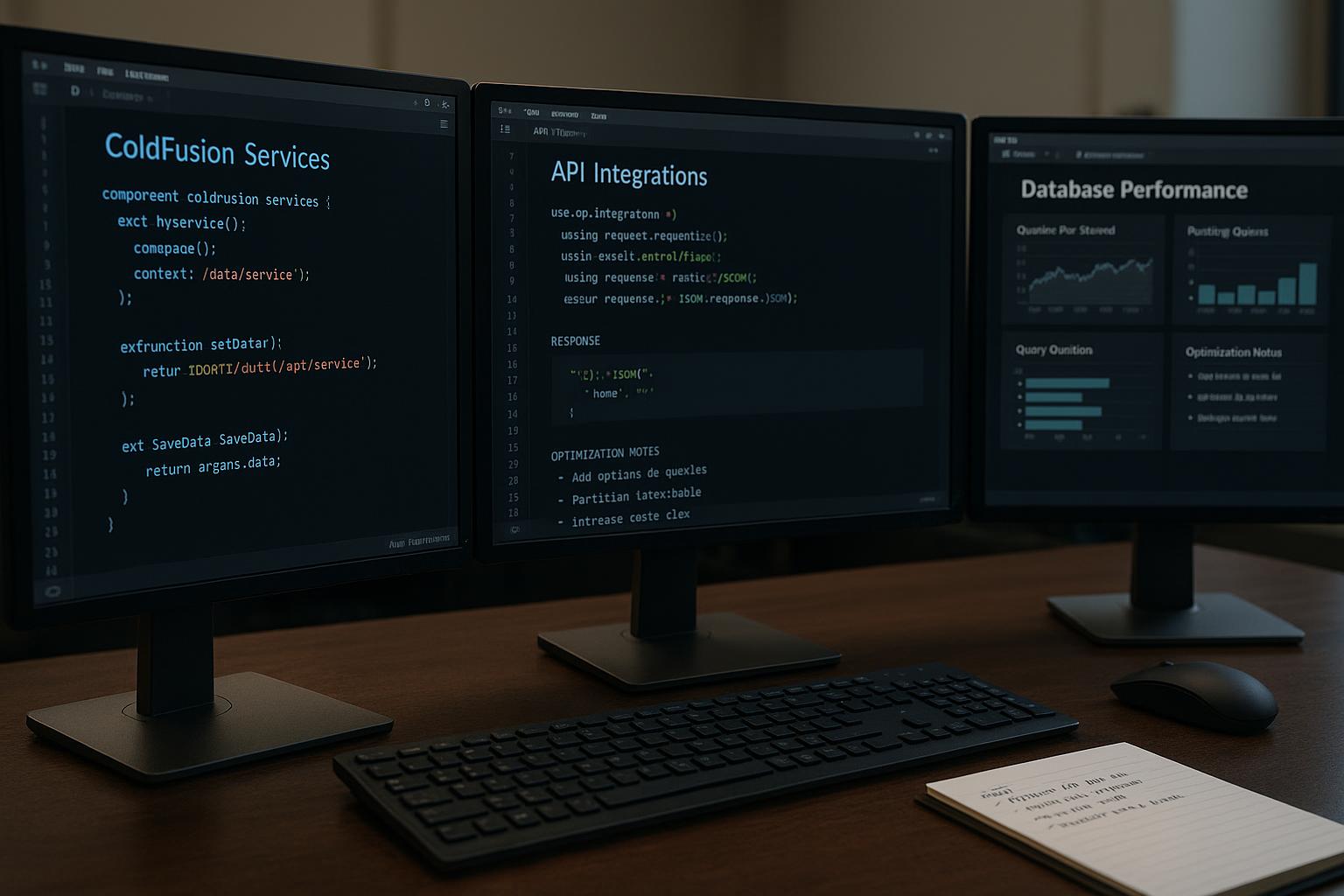
Turn Complex Data into Customer Momentum: ColdFusion web designs that convert, rank, and scale
In an era where speed, accuracy, and insight decide who wins online, a well-crafted ColdFusion-based site can be a competitive edge rather than a bottleneck. Modern ColdFusion Web Designs blend robust server-side capabilities with thoughtful user experience, strategic SEO, and data-driven marketing to produce measurable growth. At Full Blown Web Designs, we treat every CFML project as a growth engine—designed to drive leads, accelerate conversions, boost speed, lift rankings, and maximize ROI. Learn how we fuse design, engineering depth, and disciplined optimization to transform your ColdFusion stack into a precise growth machine. See how we work at https://www.fbswebdesigns.com.Why ColdFusion remains a strategic asset for modern web design
ColdFusion remains a powerful foundation for database-heavy applications, integrations, and enterprise-grade workflows. Its mature ecosystem, strong security model, and rapid development cycle enable teams to push features and data insights to market faster without sacrificing stability. When paired with modern front-end experiences, responsive design, and a disciplined approach to performance, ColdFusion Web Designs deliver: - Reliable data access and complex integrations: ERP, CRM, inventory, payment gateways, and custom APIs can live at the back end while your front end remains clean and fast. - Predictable performance at scale: CFML engines are resilient under load, and with proper caching, query optimization, and asynchronous processing, response times stay snappy. - Strong SEO and local visibility for technical businesses: technical pages, service area content, and structured data can be baked into CFML apps without sacrificing speed. - Faster time-to-market for unique functionality: you can prototype, test, and iterate business logic quickly while maintaining a polished UX. To businesses evaluating CFML investments, the payoff is not just preserved functionality; it’s a platform for growth. Our approach at Full Blown Web Designs is to treat CFML projects as assets that compound value through improved conversions, efficient operations, and better data-driven decisions. We emphasize measurable outcomes, not just pretty pages.Design and engineering depth: how Full Blown Web Designs delivers
What makes us different is not just design flair or backend chops in isolation—it’s how we fuse the two with disciplined engineering and a results-led SEO mindset. Our process centers on clarity, maintainability, and performance, so your project scales with your business. - User-centric design that respects your CFML architecture: We create interfaces that feel fast and intuitive, aligning with data-heavy workflows rather than forcing workarounds. - Robust architecture for growth: We document data models, service layers, and API contracts so new features and integrations land smoothly. - Performance engineering as a core discipline: caching strategies (query cache, page cache, and CF caching), lazy loading, and asset optimization ensure rapid page loads even on data-intensive pages. - Security-by-design: we implement secure authentication, input validation, permission boundaries, and regular audits to protect sensitive data without compromising speed. - Progressive enhancement: the frontend gracefully degrades for slower connections while preserving core functionality, ensuring a solid user experience everywhere.- Custom design tailored to CFML apps and data flows
- Elite programming and integrations with third-party systems
- ColdFusion and database-heavy development with maintainability in mind
- Technical and local SEO to improve visibility and intent capture
From code to conversions: optimizing for leads and ROI
A design that looks good is not enough. The objective is to move visitors through the funnel, capture qualified leads, and demonstrate clear ROI. With ColdFusion-based deployments, we focus on four core pillars: conversion architecture, UX clarity, data-driven experiments, and SEO-informed content. - Conversion architecture: clear CTAs, contextually relevant forms, and streamlined pathways from landing pages to key actions. We align form fields with your back-end data models to minimize friction and maximize completion rates. - UX that aligns with data flows: dashboards, order processing, or member portals are designed for efficiency, reducing task time and cognitive load. - Data-driven experimentation: we establish a measurement plan with KPIs, run A/B tests where feasible, and iterate based on what the data shows. This reduces guesswork and accelerates growth. - SEO-informed content and technical SEO: we optimize site structure, schema, canonicalization, and page-level performance to improve visibility where it matters most. Practical implementation steps are provided in the next section to help teams begin quickly and deliver incremental improvements with measurable impact. For organizations evaluating this work, expectation alignment is critical. You should expect to see improvements in engagement metrics, lower bounce rates on important pages, higher qualified lead capture, and faster time to value from new features.Practical steps to implement a CFML-driven growth program
- Discovery and KPI alignment: define your primary goals (leads, conversions, revenue, ranks) and map them to CFML workflows, data models, and front-end journeys.
- Architecture and data modeling: review existing CFML modules, database schemas, and integration points. Create a maintainable blueprint for new features and scale.
- Performance baseline and optimization plan: measure current page speeds, server response times, and cache hit rates. Prioritize caching, query optimization, and asset delivery.
- UX and conversion design: wireframes and prototypes for high-priority journeys (lead capture, quote requests, product demos). Ensure forms are short and linked to CRM or marketing automation.
- Content and SEO strategy: craft a technical SEO plan focused on fast, crawl-friendly CFML pages with structured data for services, case studies, and local intent.
- Implementation and staging: roll out changes in a controlled staging environment with automated tests, then deploy with monitoring.
- Measurement and iteration: build dashboards to monitor leads, conversions, page speed, rankings, and revenue. Iterate weekly or biweekly based on results.
Realistic business case: measurable outcomes
Company X, a mid-market B2B services provider relying on a ColdFusion-based platform with a dense product catalog and integration to a CRM, engaged Full Blown Web Designs to refresh their site and optimize for conversions and SEO. The goals were clear: increase qualified leads, improve page speed, and lift organic rankings for core service keywords. What we did - Redesign of the lead capture journey, including a streamlined form integrated with the CRM. - Backend improvements on CFML modules to support faster data retrieval and improved caching. - Technical SEO overhaul: structured data for services and case studies, improved canonical strategy, and local SEO enhancements for service area pages. - Content optimization and internal linking to reinforce topic authority and crawlability. Measurable outcomes (12-month view) - Leads: +38% (monthly qualified leads increased from 210 to 290–305 leads) - Conversions: +22% in the primary quote-request funnel (click-to-submit rate improved by 18 percentage points for top pages) - Speed: Time to first byte improved from 680 ms to 420 ms (38% faster); overall page load reduced from 3.1 s to 1.9 s on core pages - Rankings: 5 target service keywords moved from positions 8–12 into the top 3 on Google, with several near-term rankings in the top 5 for local searches - Revenue impact: estimated annual revenue uplift of 24% attributable to higher lead quality and faster conversion, supported by better attribution data This case demonstrates what ColdFusion Web Designs can achieve when high-quality design, robust CFML engineering, and data-driven optimization are combined. The outcomes were not only in more leads and faster pages but also in higher-quality traffic and increased trust signals that support long-term growth.SEO and local search for ColdFusion sites
Technical SEO for ColdFusion Web Designs requires attention to the same fundamentals you’d apply to any modern site, with additional focus on data-heavy pages and dynamic content. Key considerations include: - Page speed at the core: optimize server response, caching strategies, image delivery, and minification to ensure fast rendering even for data-driven pages. - Structured data and schema: implement service, product, and local business schema to help search engines understand your offerings and local intent. - Content architecture: build a clean hierarchy with topic clusters that reflect your services, case studies, and FAQs. Cross-linking reinforces authority signals and distributes authority to important pages. - Local SEO for service areas: optimize Google Business Profile, local landing pages, and localized content to capture searches for nearby prospects. - Technical hygiene: proper canonicalization, avoidance of duplicate content, and clean URL structures that reflect page intent. We bring a disciplined SEO methodology to your CFML project, ensuring that performance gains translate into better crawlability and rankings. You’ll see a growth trajectory where improvements in speed and structure contribute to higher visibility for your target keywords and service areas.Implementation blueprint for teams working with ColdFusion
- Start with a performance and SEO audit: identify bottlenecks, slow CFML routes, and pages with high bounce risk. - Prioritize high-value pages: focus on the top 5–10 pages that drive the most qualified traffic and conversions. - Design for conversion, not just aesthetics: align CTAs with CRM intake and marketing automation workflows, keeping forms concise and action-driven. - Establish a testing cadence: implement a lightweight A/B testing plan where possible, especially for landing pages and lead capture forms. - Build a scalable content plan: create a content calendar around services, case studies, and FAQs aligned with local intent. - Monitor, report, and optimize: set up dashboards that track leads, conversions, speed, rankings, and revenue; use insights to iterate. This approach helps ensure your CFML platform delivers consistent improvements across user experience, performance, and search visibility, while staying maintainable for developers and scalable for business growth.Frequently Asked Questions
Q: Is ColdFusion still a viable platform for new web projects?
A:
Yes. ColdFusion remains a pragmatic choice for projects with complex data integration, large-scale enterprise requirements, and rapid back-end development. When paired with modern front-end patterns and a disciplined optimization strategy, ColdFusion sites can deliver durable performance, security, and ROI. Full Blown Web Designs specializes in turning CFML into a growth engine rather than a technical constraint.
Q: How does Full Blown Web Designs ensure measurable SEO improvements for a ColdFusion site?
A:
We start with data-driven audits, then implement structured data, local optimization, and performance enhancements. Our approach emphasizes crawl-friendly architectures, clear page hierarchies, and practical content strategies that align with user intent and business goals. We track KPIs such as organic traffic, keyword rankings, click-through rates, and conversions to quantify progress.
Q: What makes your team different for ColdFusion and database-heavy development?
A:
We pair deep CFML expertise with design and growth-minded SEO. Our engineers understand the data flows, dependencies, and performance characteristics of database-heavy applications, while our designers ensure user experiences that convert. This cross-disciplinary capability is essential for delivering projects that perform well on speed, reliability, and search visibility.
Q: Can you handle on-going maintenance and future feature work?
A:
Absolutely. Our engagement model includes architecture and documentation, ensuring maintainability. We plan for future features, API integrations, and content updates, so growth initiatives scale without breaking existing functionality.
Q: How do I start a project with Full Blown Web Designs?
A:
Reach out to us to discuss your goals and current stack. We’ll conduct a high-level assessment, share a tailored plan, and provide a transparent timeline and cost estimate. Our team coordinates closely with your stakeholders to ensure alignment from discovery through deployment and optimization.
Contact Full Blown Web Designs
For more information, please contact us at support@fullblown.com or call (661) 429-0940.